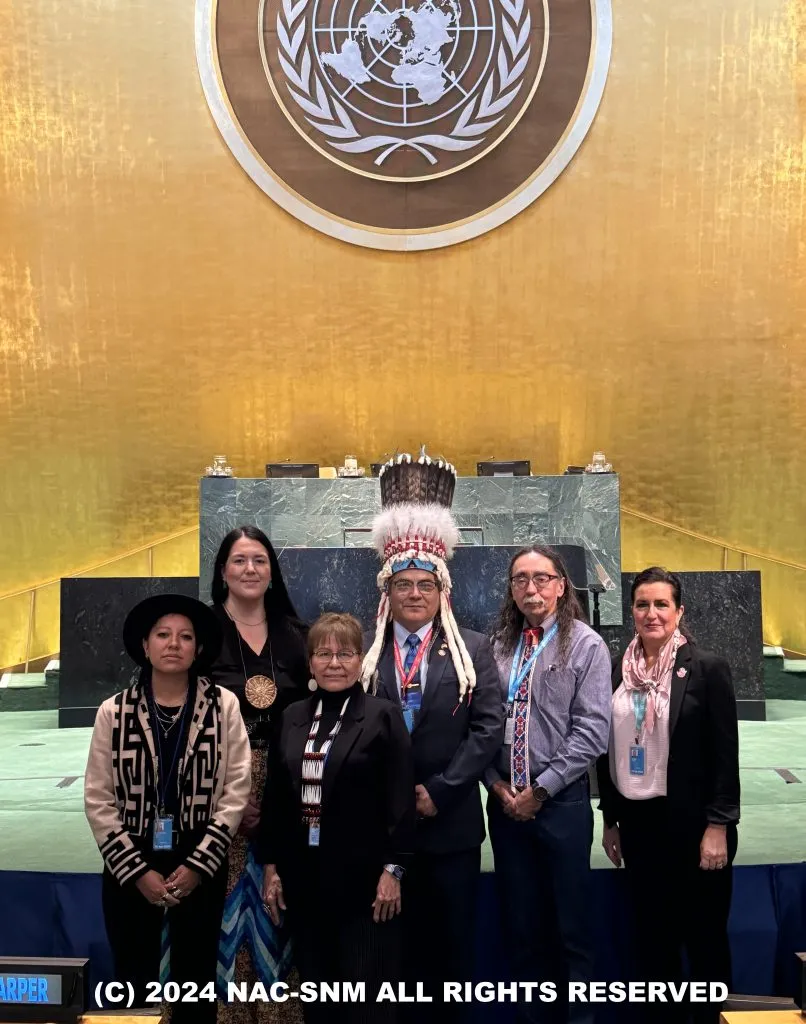
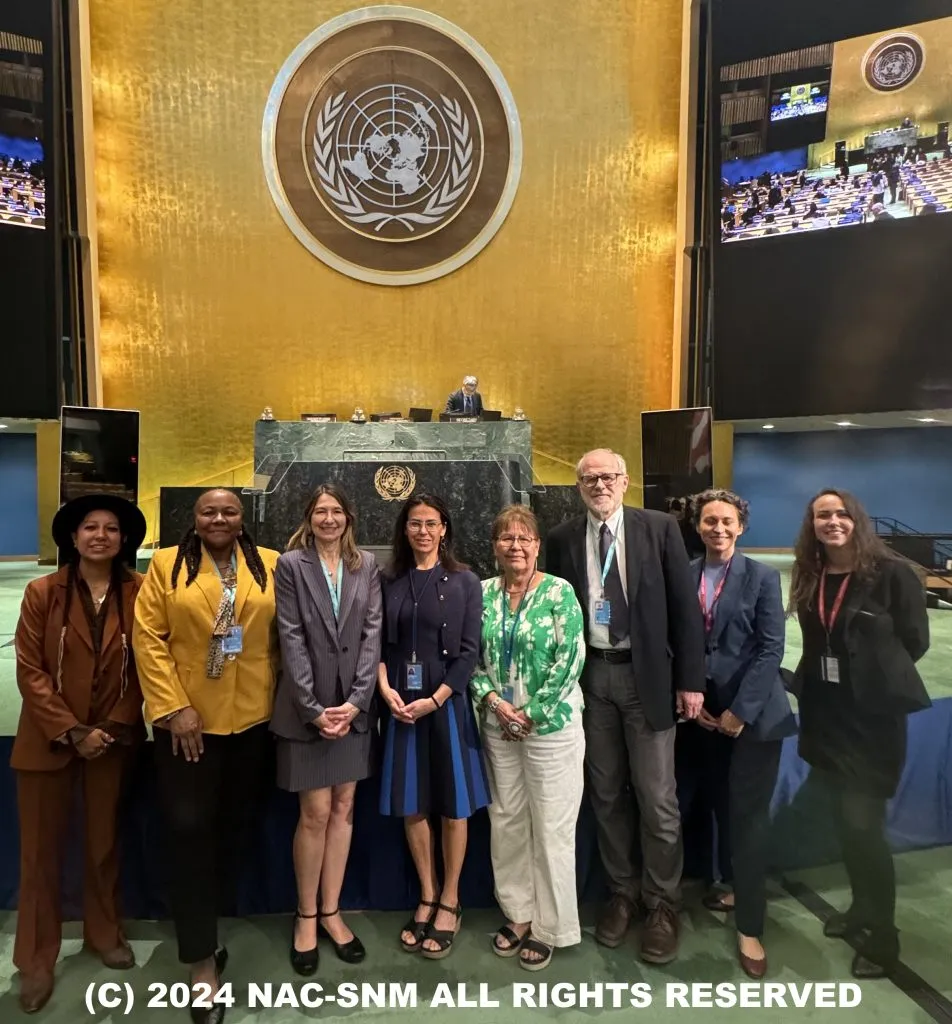
NAC-SNM joins Indigenous Peoples from across the world
NAC-SNM joins Indigenous Peoples from across the world
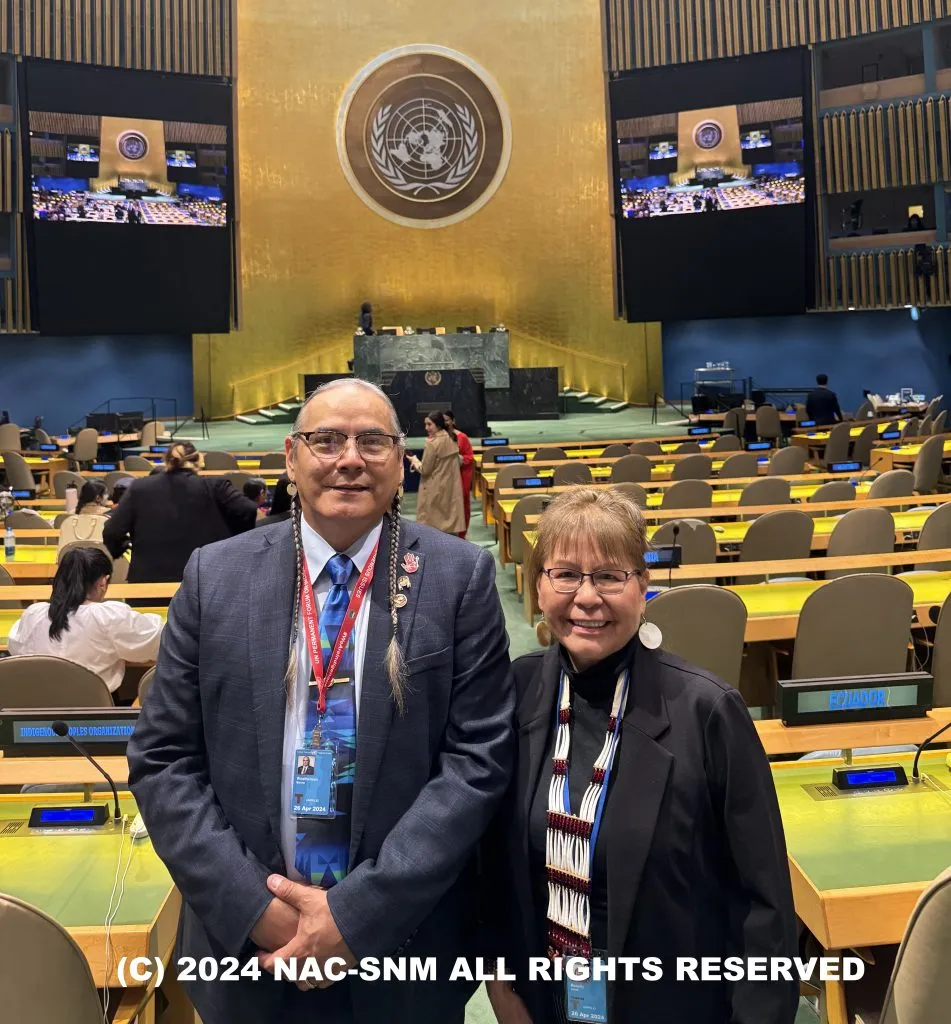
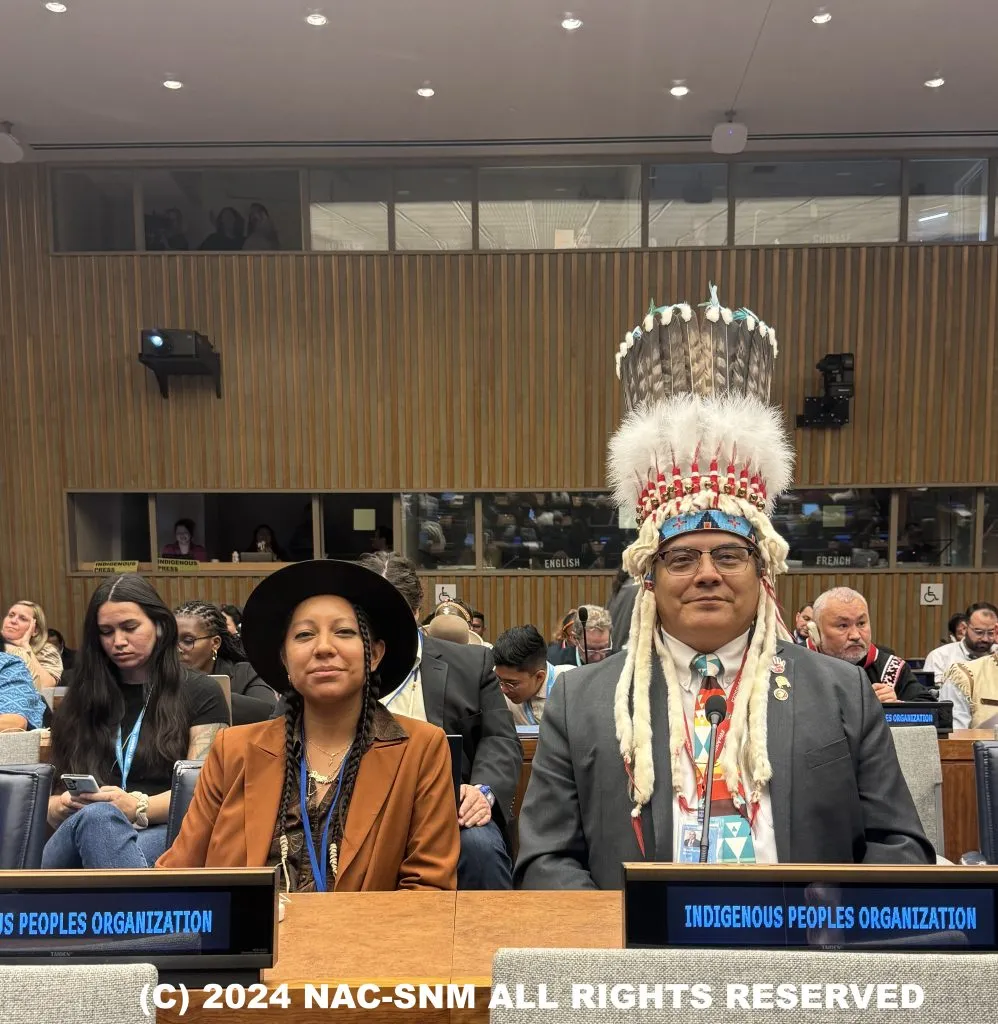
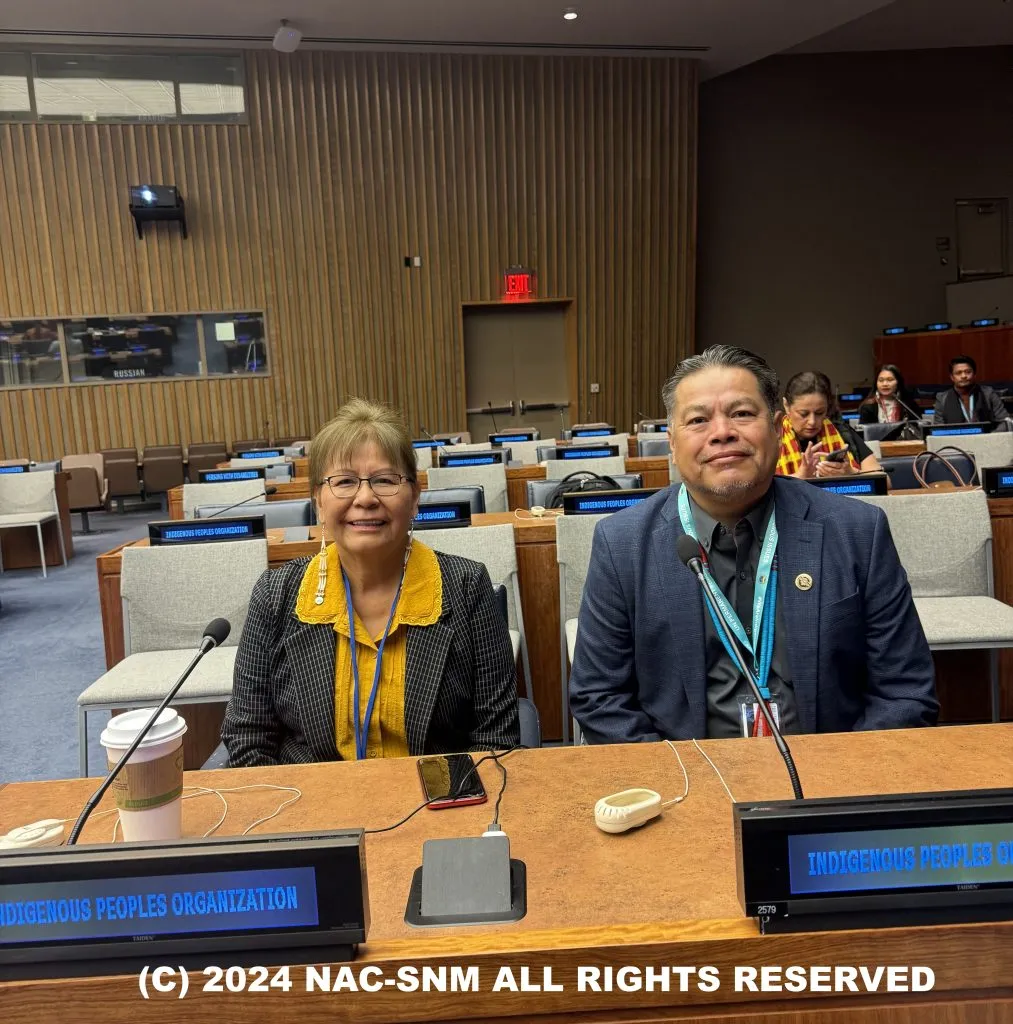
NAC-SNM joins Indigenous Peoples from across the world, including the Coalition of Large Tribes and National Congress of American Indians at the United Nations
NAC-SNM joins Indigenous Peoples from across the world, including the Coalition of Large Tribes and National Congress of American Indians at the United Nations
Domestic discord has prevented the United States from emerging as a leader, especially in the international field, when it comes to international indigenous rights.” [1]
~Whitney Gravelle, President, Bay Mills Indian Community
Dedicated U.N. representation to NAC-State of New Mexico Next Gen: leaders of today and tomorrow
Indigenous Peoples have the right to traditional medicines and plants, and cultural, religious, and spiritual practices as recognized in the United Nations Declaration on the Rights of Indigenous Peoples. The Declaration presents an opportunity and a new kind of legal authority that could help Indigenous peoples to preserve and protect cultural, religious, and spiritual practices, and to secure rights to sacred places. “Last week, our representative amplified the message at the U.N. Permanent Forum that the Declaration asserts and protects the rights of indigenous peoples to have and use their traditional medicines and plants, and to access and protect the sacred lands on which these medicines and plants grow,” said Leo Dayish, President, NAC-SNM.
What is the theme of the 23rd Session of UNPFII?
Indigenous Peoples Right to Self-Determination. Permanent Forum Member Keith S. Harper described self-determination as follows: If a decision is going to impact a tribal community, then it is the tribal community itself that must have a say on how to handle the matter, and to determine what considerations should be brought to bear. Simply stated, tribal communities should decide on things that impact them, their members, their land, their traditional knowledge, their medicinal plants, their language, and their ceremonies.
U.S. Indigenous Peoples entered oral and written interventions at the 23rd Session of the UNFPII
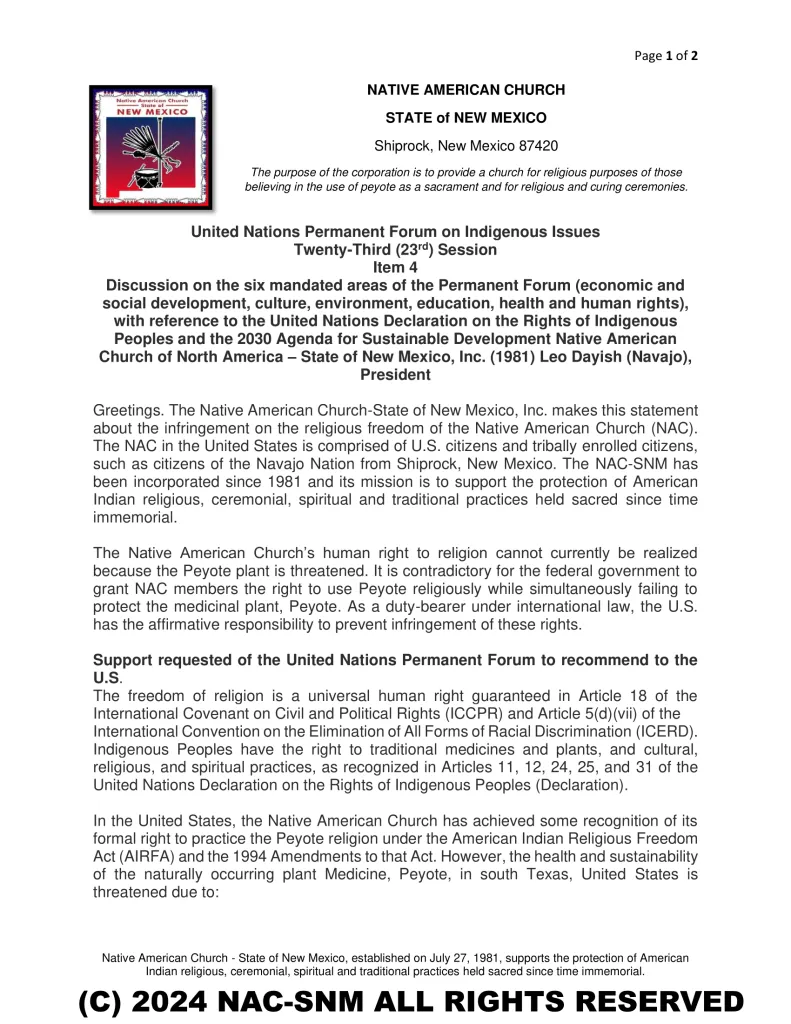
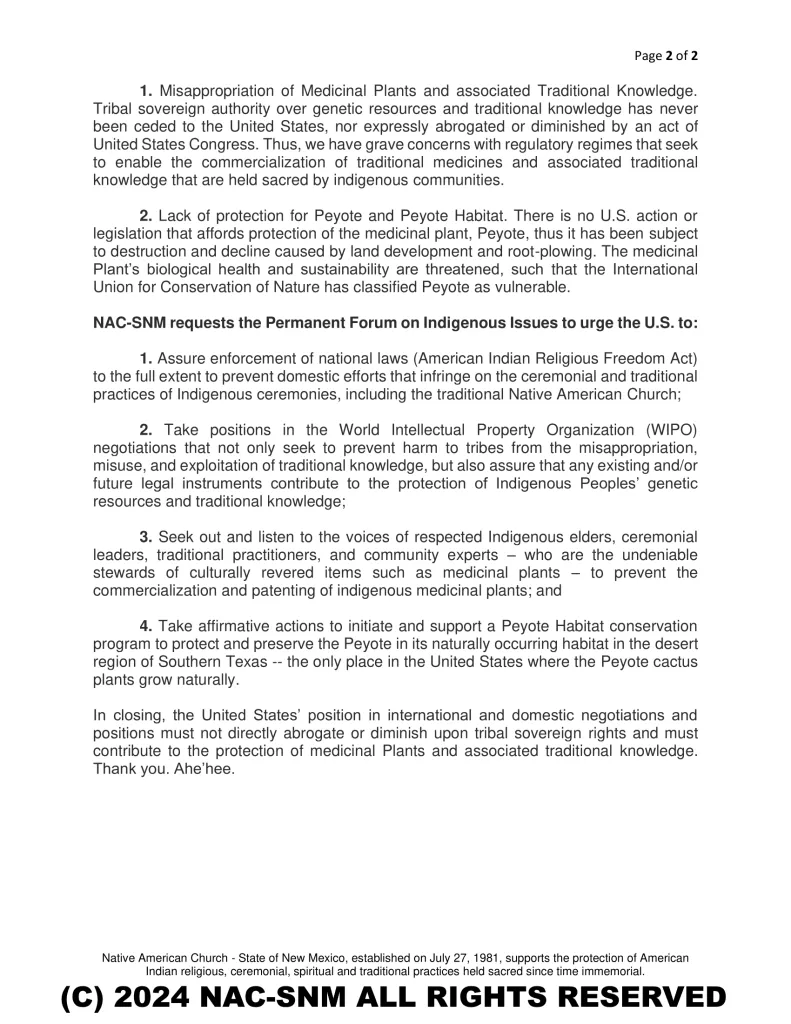
NAC-SNM’s written intervention expressed that the health and sustainability of the naturally occurring plant Medicine, Peyote, that grows in south Texas, United States is threatened due to Misappropriation of Medicinal Plants and associated Traditional Knowledge and Lack of protection for Peyote and Peyote Habitat. NAC-SNM requested the Permanent Forum on Indigenous Issues to urge the U.S. to:
Seek out and listen to the voices of respected Indigenous elders, ceremonial leaders, traditional practitioners, and community experts – who are the undeniable stewards of culturally revered items such as medicinal plants – to prevent the commercialization and patenting of indigenous medicinal plants; and
Take affirmative actions to initiate and support a Peyote Habitat conservation program to protect and preserve the Peyote in its naturally occurring habitat in the desert region of Southern Texas.
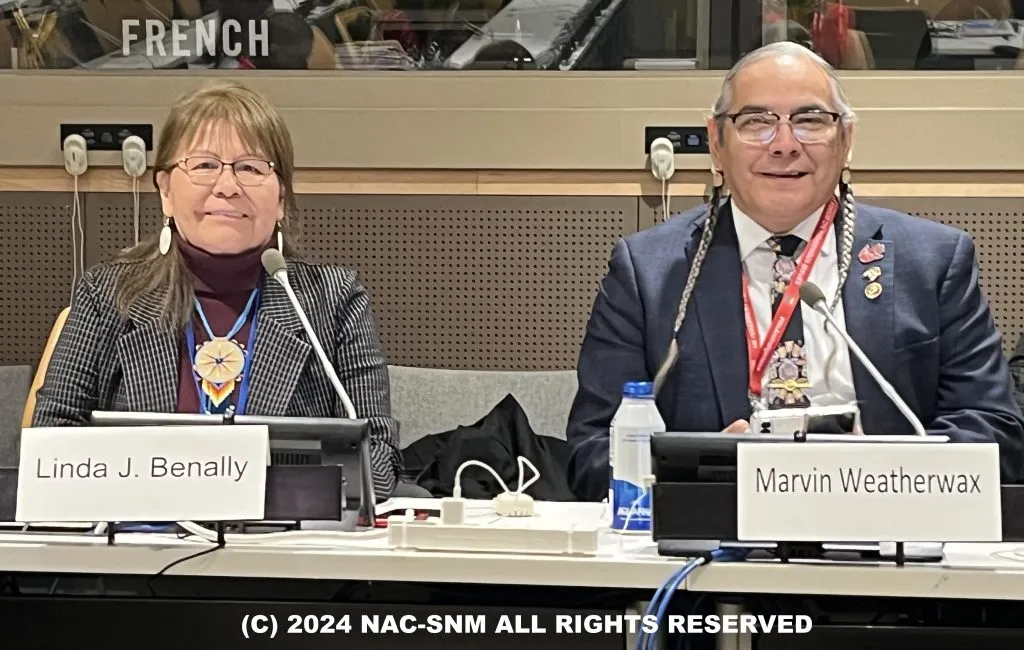
Addressing the continuing public safety crisis on U.S. Indian reservations, which threatens our economic and social development, culture, environment, education, health and human rights, Coalition of Large Tribes Chairman Marvin Weatherwax stated, “As a global community, it is time to provide justice, truth and reconciliation to Indigenous Peoples and provide much needed resources for our collective safety and healing.”
In support of enhanced participation in the United Nations, NCAI President Mark Macarro, on behalf of NCAI and NARF stated, “As sovereign Peoples who have governed ourselves on our homelands since time immemorial, we should rightfully be able to fully participate in the community of Nation-States. Indigenous Peoples have been carrying out governance activities since time immemorial—long predating the formation of the State members of the United Nations.”
NCAI and NAC—SNM also made oral and written comments directed to the World Intellectual Property Organization negotiations. NCAI stated, “For hundreds of years, we have suffered from the exploitation of our traditional knowledge associated with plants and other genetic resources and we want to make clear that our rights to culture, religion, land, economy, and health are at stake in the WIPO negotiations.”
Side Event with Indigenous Peoples leaders from Belize, Australia and the U.S.
Self-Determining Land Management: Indigenous Peoples Rights to Religion, Culture & Economic Development
At this side event, Linda Benally, NAC SNM, spoke on behalf of the preservation of the sacred sacrament Peyote & the lands upon which the medicine grows in south Texas. “She strongly recommended preservation of the limited habitat of Peyote as an expression of our right to self-determination and our right of all our future generations to be able to enjoy that right,” said Ron Laneman. Ron attended the side event at the 23rd Session of the UNPFII in his capacity as the President of the International Indian Treaty Council. He said, “the presentation made by Linda was very prolific and was done so with a lot of passion and expert knowledge.” Ron further stated, “we need more champions like Linda in order to achieve the continuance of our ceremonial way of life not only for the people of today but for our future generations.” Ron Laneman is from Beaver Lake Cree Nation in Alberta, Canada.
Another insightful side event, Embracing the Declaration – Indigenous Peoples’ Policy in the U.S., was well attended. The discussion was hosted by the NARF and University of Colorado Law School. The panelists included U.S. Assistant Secretary for Indian Affairs Bryan Newland, Bay Mills Indian Community, and representatives from the Department of Commerce and Agency for International Development. At that session, Mr. Newland highlighted the Biden administration’s recent policies to increase inclusion of tribal nations’ priorities and perspectives.
Thank you to Honorable Marvin Weatherwax, Chairman, Coalition of Large Tribes, for his and COLT’s tremendous support at the U.N. We heartily extend appreciation to our colleagues at the University of Colorado Indian Law Program and the Native American Rights Fund.