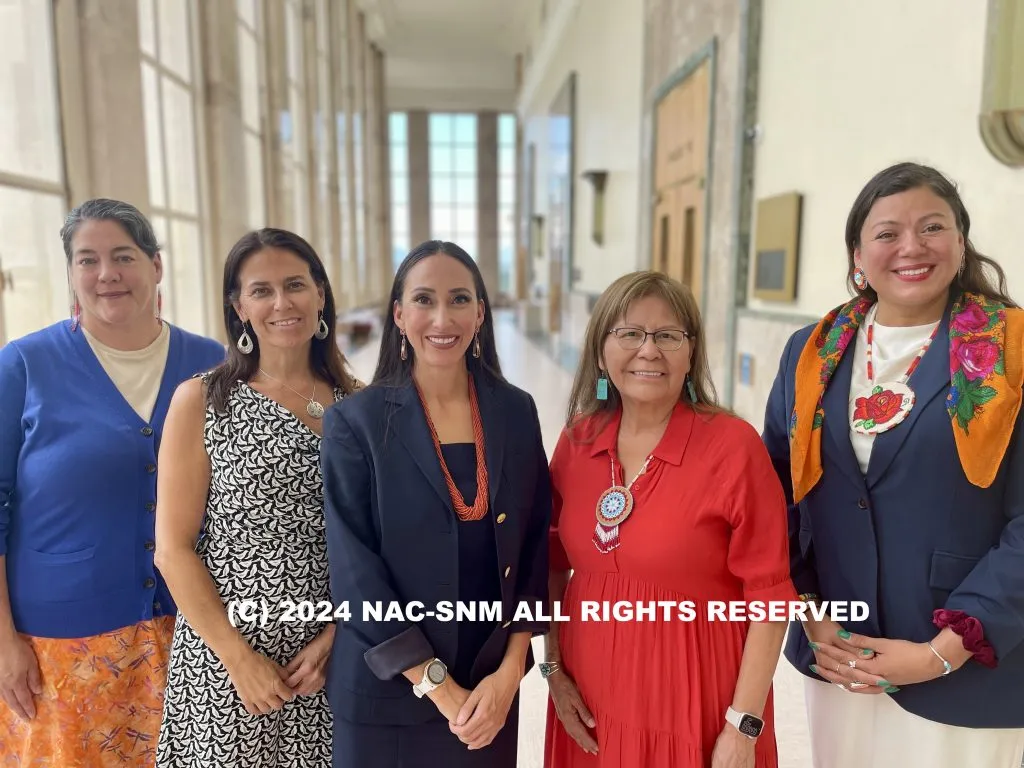
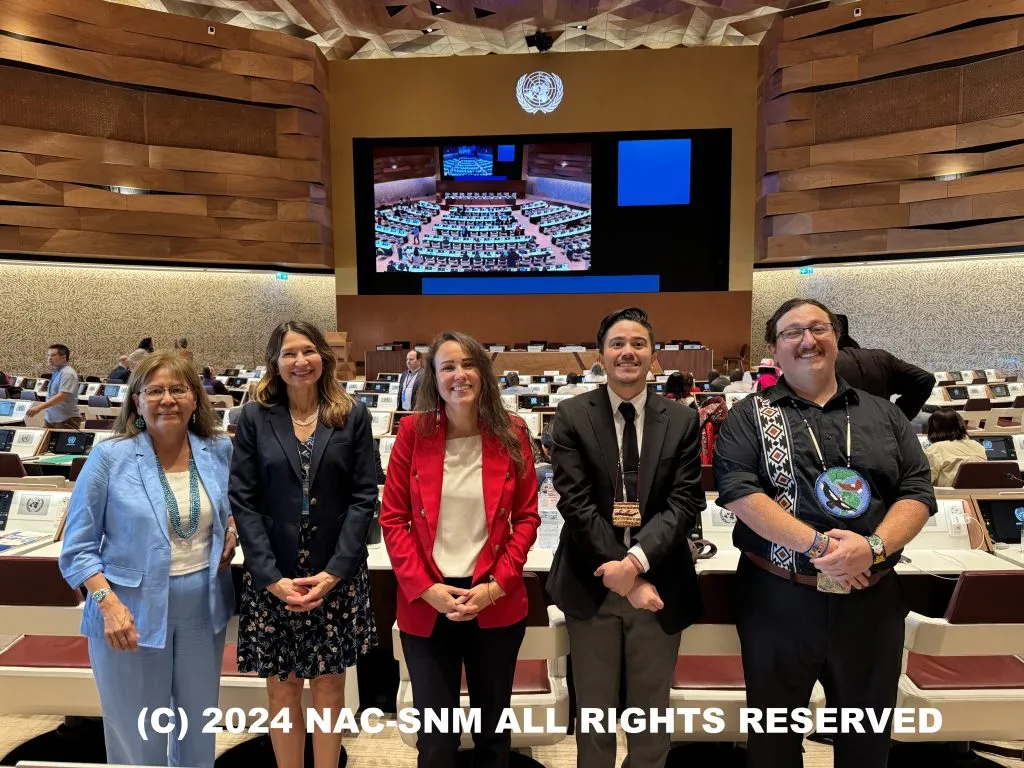
NAC-SNM amplifies message for protection of traditional plant medicines and associated traditional knowledge at the United Nations in Geneva.
For Immediate Release
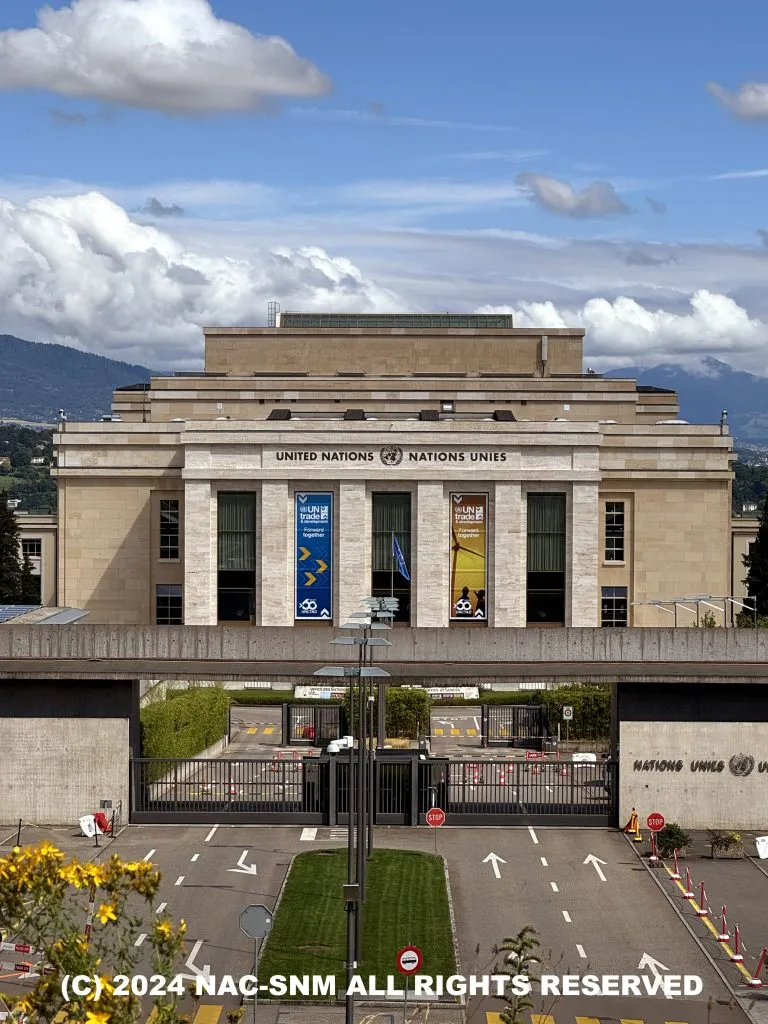
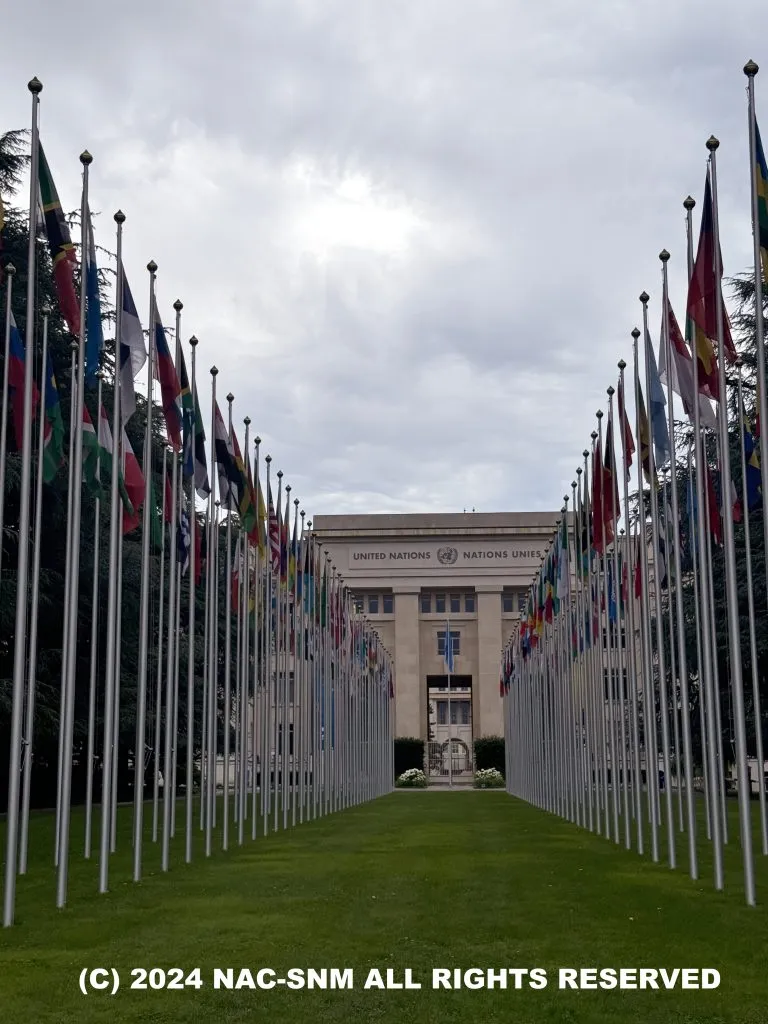
Palais des Nations
Geneva, Switzerland
July 12, 2024
Indigenous Peoples from around the world, Member State representatives, and organizations, including NAC-SNM, gathered to engage in dialogue regarding the rights of Indigenous Peoples at the 17th Session of the Expert Mechanism on the Rights of Indigenous Peoples (Expert Mechanism or EMRIP) in Geneva, Switzerland on July 8-12, 2024.
NAC-SNM continued its advocacy for protections of traditional plant medicine and knowledge. This international work started with discourse at the Pawnee Nation in 2021 in collaboration and coordination with Michael Burgess (Comanche) and Walter Echohawk (Pawnee). “The diplomatic efforts also build on NAC-SNM’s efforts at the United Nations Permanent Forum on Indigenous Issues held in New York City in 2023 and 2024,” said Leathan Dayish, Vice-President, NAC-SNM.
The Expert Mechanism is a subsidiary body of the United Nations’ Human Rights Council, comprised of 47 Member States, including the United States. The EMRIP provides the Human Rights Council with expertise and advice on the rights of Indigenous Peoples and to advance the aims of the United Nations Declaration on the Rights of Indigenous Peoples (the Declaration). The session concludes with an annual report and submission of studies to the Human Rights Council.
Among other items, the 17th Session of the Expert Mechanism presented a draft study assessing actions that Member States across the world have taken to achieve the ends of the Declaration. The study concluded with advice on how States should take measures to achieve the ends of the Declaration within the context of their human rights obligations and responsibilities.
[read more]
The Expert Mechanism also discussed “Enhancing the Participation of Indigenous Peoples’ Representatives and Institutions in Meetings of Relevant United Nations Bodies on Issues Affecting Them.” This work stems from the commitment made by Member States to consider the participation of indigenous peoples at the United Nations during the World Conference on Indigenous Peoples in 2014. This has involved ongoing work over the last decade with Indian Nations in the U.S., NCAI, and across the world providing input to the UN General Assembly on this topic.
At the close of the 17th Session, the Expert Mechanism approved proposals to be submitted to the Human Rights Council for its consideration and approval.
What proposals did NAC-SNM offer to the EMRIP?
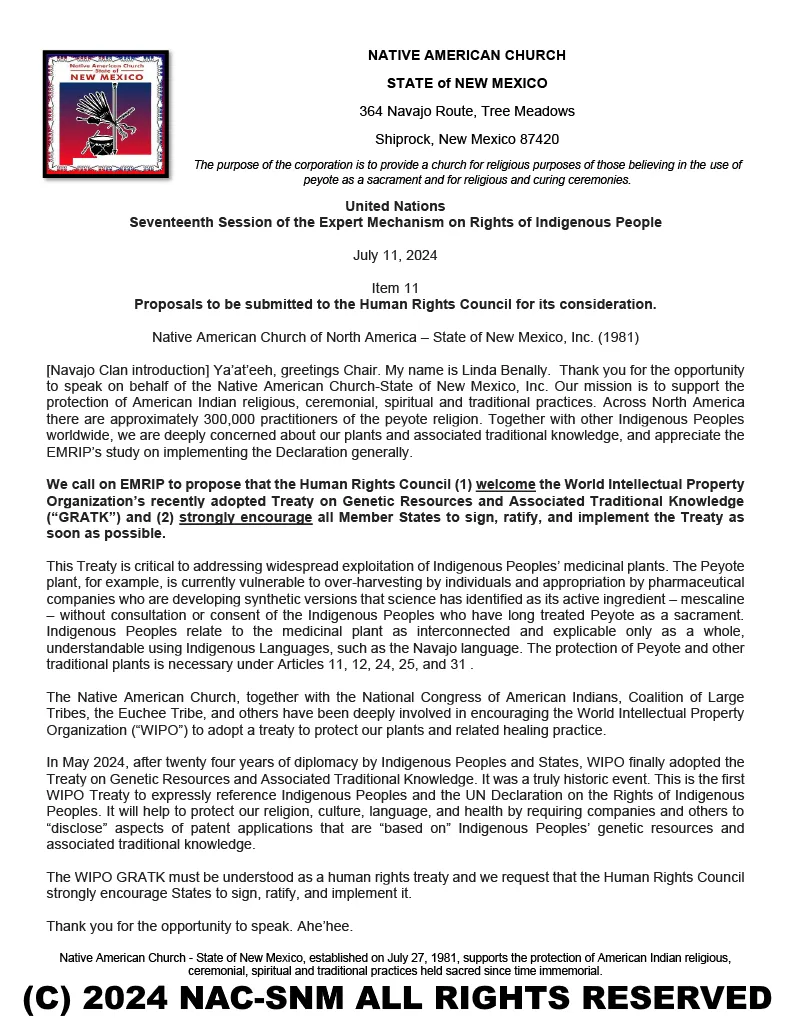
NAC-SNM called on the EMRIP to propose that the Human Rights Council (1) welcome the World Intellectual Property Organization’s recently adopted Treaty on Genetic Resources and Associated Traditional Knowledge and (2) strongly encourage all Member States to sign, ratify, and implement the Treaty as soon as possible.
This WIPO Treaty is critical to addressing widespread exploitation of Indigenous Peoples’ medicinal plants. “The Peyote plant, for example, is currently vulnerable to appropriation by pharmaceutical companies who are developing synthetic versions of what science has identified as its active ingredient – mescaline – without consultation or consent of the Indigenous Peoples who have long treated Peyote as a sacrament,” said Terry Dayish, Editor-in-Chief, NACNA. NAC-SNM’s intervention on the UN floor stated, “Indigenous Peoples relate to the medicinal plant as interconnected and explicable only as a whole, understandable using Indigenous Languages, tribal languages, such as the Navajo language.”
NAC-SNM called on the EMRIP to consider adding advice about the implementation of the Declaration in the context of traditional plant knowledge and traditional ceremonial practices. “Indigenous Peoples have rights over their traditional knowledge, traditional cultural expressions, and genetic resources, recognized in Articles 11, 12, 24, 25, and 31 of the Declaration,” said Leo Dayish, President, NAC-SNM. As duty-bearers under international law, member states, including the United States have the affirmative responsibility to prevent infringement of these rights.
NAC-SNM’s intervention below. NCAI and NARF also entered interventions.
In Geneva, NAC-SNM continued its discussion (started at the UNPFII) with representatives from the State Department, the Department of the Interior, and U.S. Patent and Trade Office to discuss medicinal plant and traditional knowledge protections and medicinal plant habitat protection, including the Peyote Gardens in Texas.
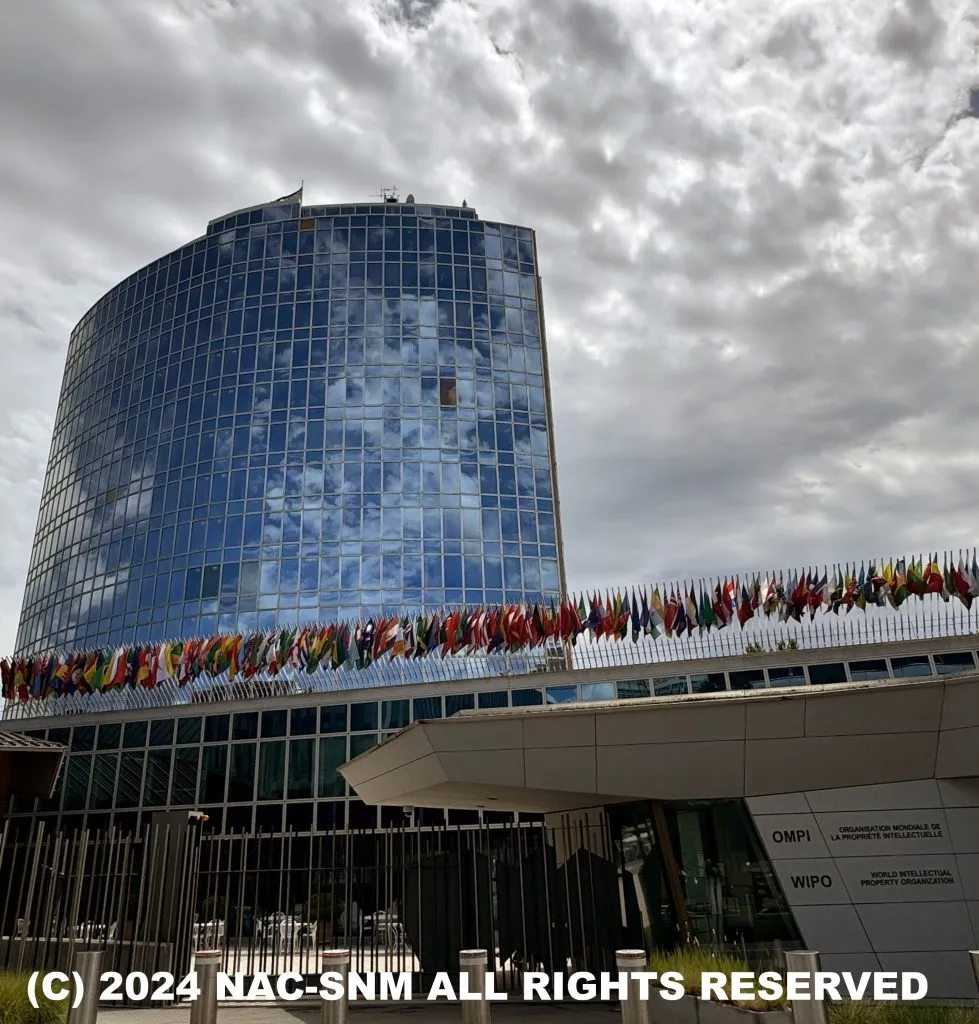
NAC-SNM had an opportunity to visit WIPO’s Traditional Knowledge Division. NCAI, Tulalip Tribe, and NARF representatives attended the WIPO General Assembly also held at the same time. NAC-SNM thanks colleagues from the University of Colorado American Indian Law Program, the Native American Rights Fund, the National Congress of American Indians, and the Coalition of Large Tribes for their support and collaboration. NAC-SNM also extends gratitude for informal discussions with interested stakeholders exploring how medicinal plant and associated traditional knowledge protections intersect with their efforts.
Side Event at EMRIP 2024 on Impacts of Boarding Schools
There was a side-event on Impacts of Boarding Schools: In search of answers and healing. The panelists discussed domestic U.S. efforts that are underway to understand and address the ongoing trauma created by the U.S. Boarding School policy, including current federal legislative efforts.
In Geneva, NAC-SNM continued its discussion (started at the UNPFII) with representatives from the State Department, the Department of the Interior, and U.S. Patent and Trade Office to discuss medicinal plant and traditional knowledge protections and medicinal plant habitat protection, including the Peyote Gardens in Texas.
NAC-SNM had an opportunity to visit WIPO’s Traditional Knowledge Division. NCAI, Tulalip Tribe, and NARF representatives attended the WIPO General Assembly also held at the same time. NAC-SNM thanks colleagues from the University of Colorado American Indian Law Program, the Native American Rights Fund, the National Congress of American Indians, and the Coalition of Large Tribes for their support and collaboration. NAC-SNM also extends gratitude for informal discussions with interested stakeholders exploring how medicinal plant and associated traditional knowledge protections intersect with their efforts.
Side Event at EMRIP 2024 on Impacts of Boarding Schools
There was a side-event on Impacts of Boarding Schools: In search of answers and healing. The panelists discussed domestic U.S. efforts that are underway to understand and address the ongoing trauma created by the U.S. Boarding School policy, including current federal legislative efforts.
[/read]