NAC-SNM AND INDIAN COUNTRY COMMEMORATES THE PEARL ANNIVERSARY of LANDMARK LEGISLATION, AIRFA 1994
October 5, 2024
Shiprock, Navajo Nation, New Mexico
As we celebrate this 30-year mark of the 1994 Amendments to the American Indian Religious Freedom Act (AIRFA 1994), NAC-SNM expresses gratitude for all who facilitated the passage of AIRFA 1994— a legislation that allows us to observe and preserve sacred elements of our traditional way of life. The outcome is a shining example (pearl) of collaboration and leaning into the support of others for the good of the whole.

We reflect on the history of this journey.
46 years ago, Congress passed the American Indian Religious Freedom Act of 1978.
AIRFA, enacted on August 11, 1978, is a significant U.S. legislation that aims to protect and preserve the religious rights and cultural practices of American Indians, Alaska Natives, and Native Hawaiians. It protects the rights of Native peoples to practice their religions and requires federal agencies to consult with tribes to review policies and procedures that may affect tribal religious practices. In part, it reads:
“[I]t shall be the policy of the United States to protect and preserve for American Indians their inherent right of freedom to believe, express, and exercise the traditional religions of the American Indian, Eskimo, Aleut, and Native Hawaiians, including but not limited to access to sites, use and possession of sacred objects, and the freedom to worship through ceremonials and traditional rites.”
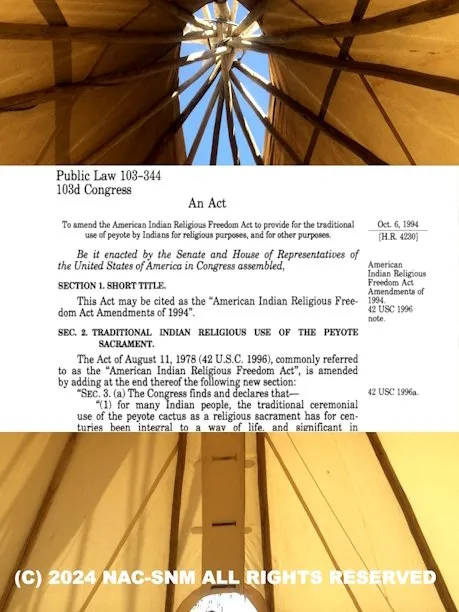
30 years ago, Congress amended AIRFA 1978 to protect the sacramental use of Peyote.
AIRFA 1994 Amendments stand on the foundation of AIRFA 1978. At passage, Congress acknowledged the lack of adequate and clear legal protection for the religious use of Peyote by Native Americans, which marginalizes Tribal Nations and cultures. Thanks to AIRFA 1994, the NAC community can now lawfully use, possess, or transport peyote for bona fide traditional ceremonial purposes in connection with the practice of a traditional Indian religion. The United States or any State must not prohibit such practice.
[read more]
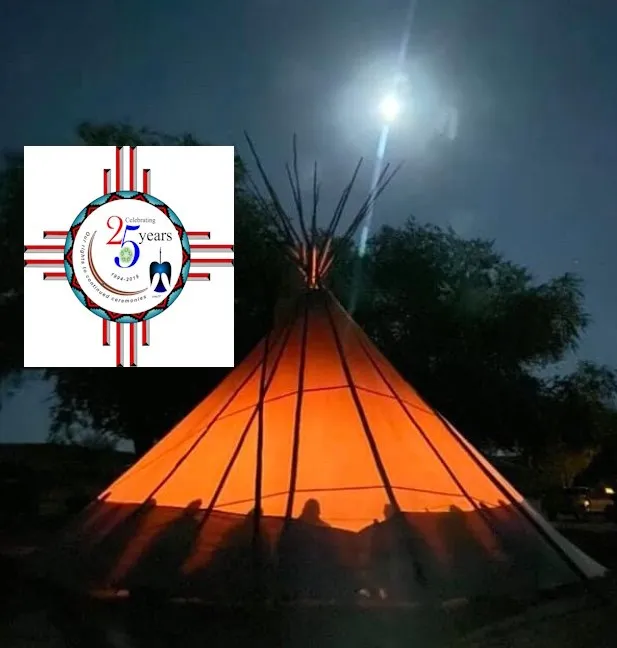
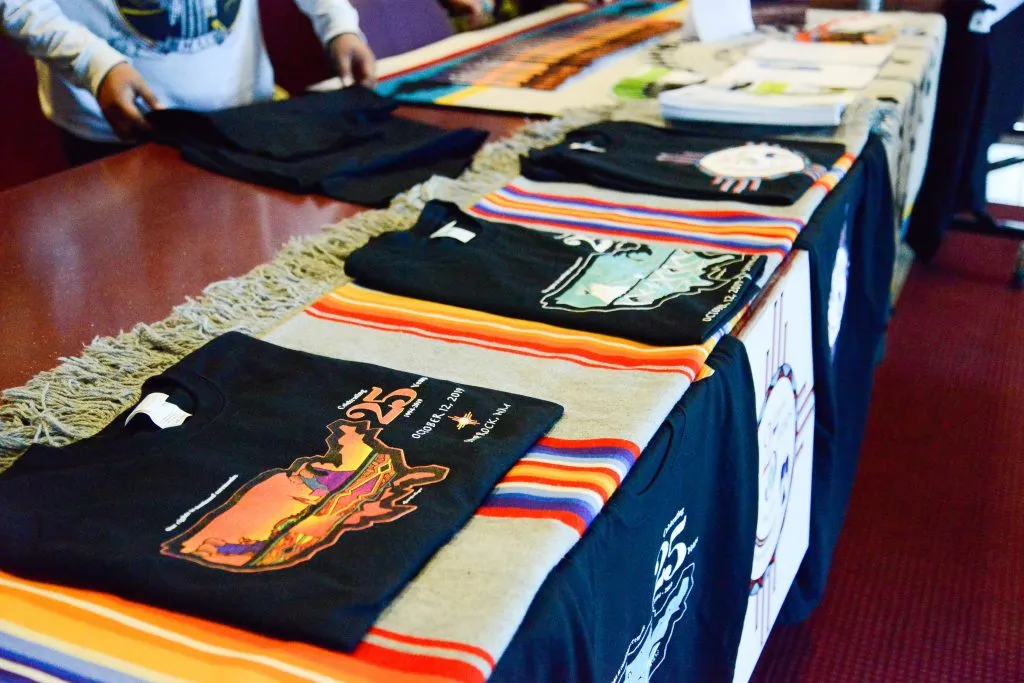
5 years ago. On October 12, 2019, NAC-SNM commemorated the Silver (25th) Anniversary of 1994 Amendments to AIRFA. Spiritual, tribal, and philosophical leaders involved with the passage of P.L. 103-344 assembled in Shiprock, Navajo Nation, New Mexico. All in attendance reflected, honored, reconnected, educated, and celebrated the landmark legislation. At sunset, the beat of the drum accompanied by the sound of the gourd resonated across the grounds from a tipi. There was a Peyote meeting underway to pray for a Navajo serviceman’s deployment overseas—for his travel, service, and his safe return. Leading the prayer circle was NAC-SNM founder and roadman Frankie Dayish.
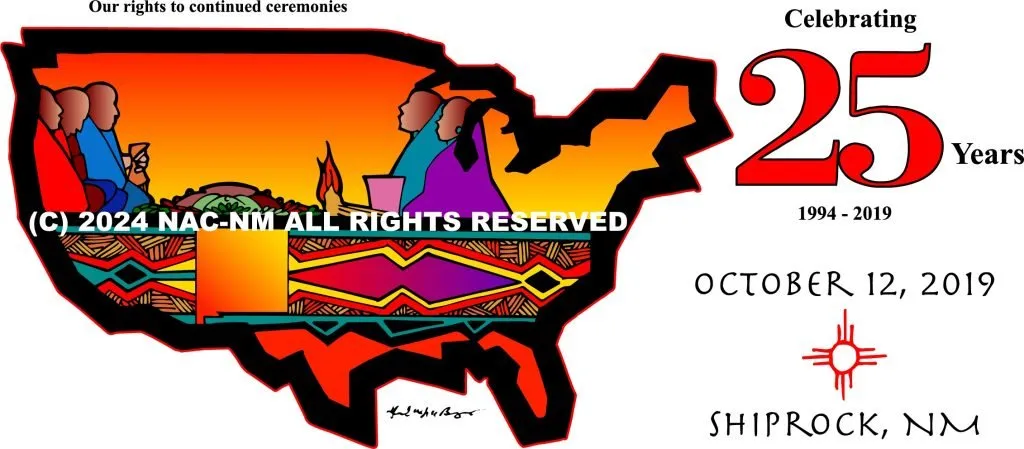
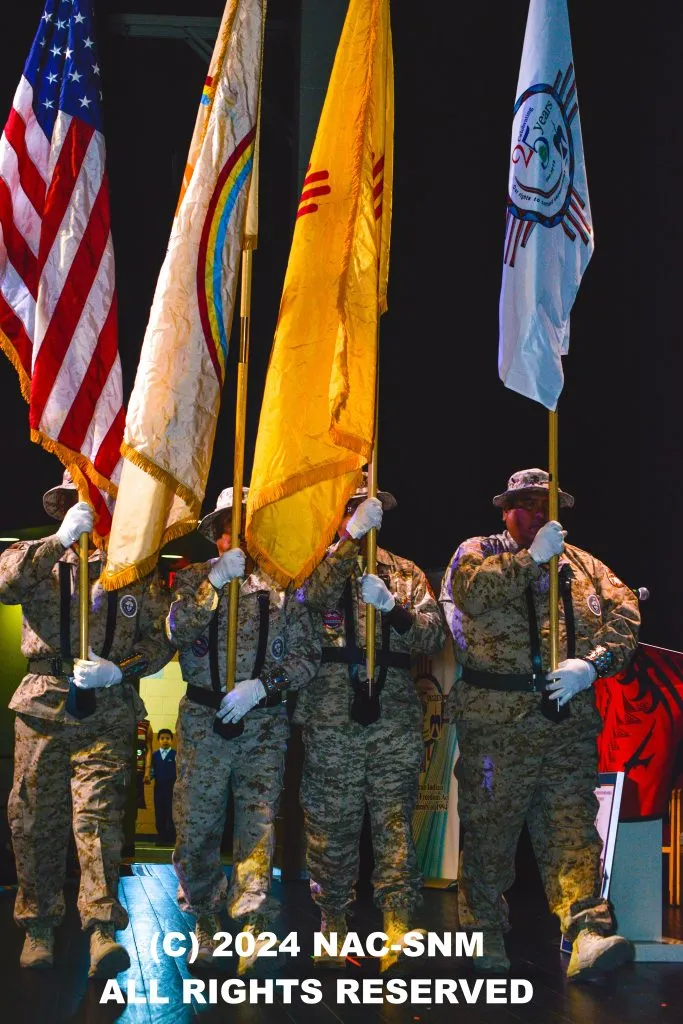
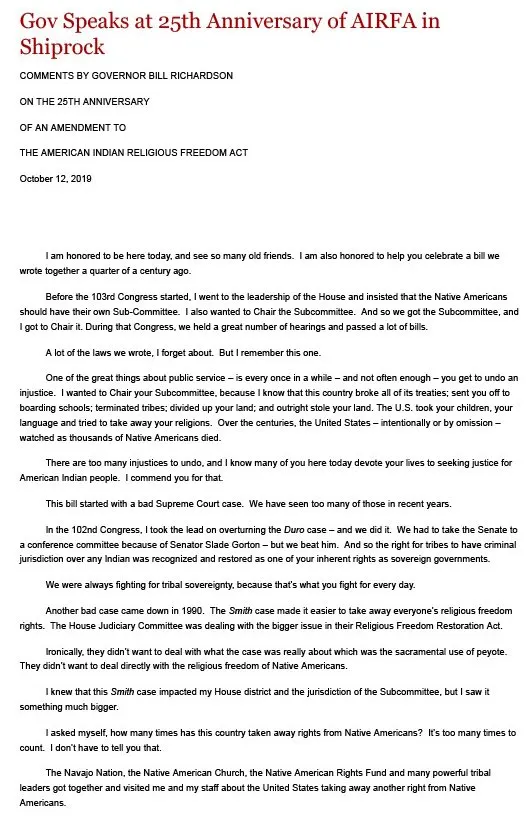
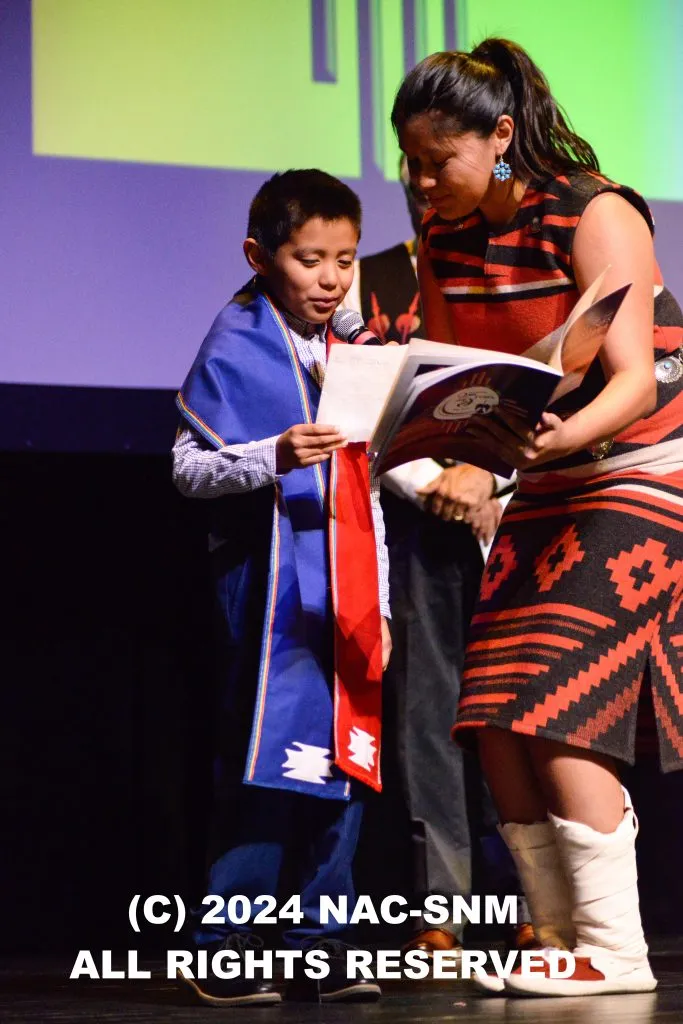
See photo collage of NAC-SNM Silver Anniversary Program and read Governor Richardson’s statement.
Today. In the Spirit of Synergy, NAC-SNM—applauds the 2024 AIRFA 1994 celebrations being held across Indian Country. We believe these commemorative celebrations enable and empower the next generation Native American Church community with teachings, oral history, information about times past, Peyote’s ecosystem and intrusions thereof, and its hallmark qualities of relentless and graceful presence.
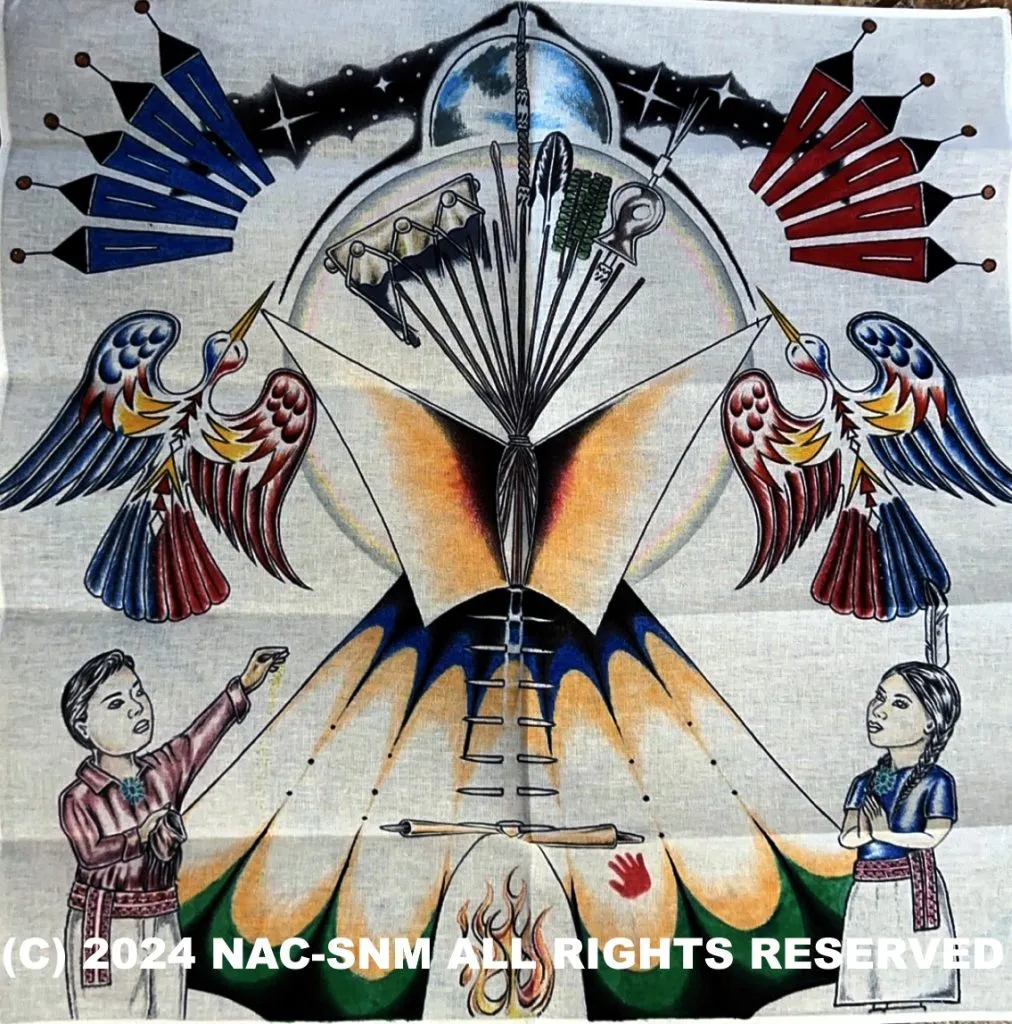
AIRFA 1978 is approaching its 50th anniversary. The Next Gen NAC are the keepers of the ceremonies, traditional knowledge, and medicinal plants. We are thankful they actively take part in discussions and carry on the work of the NAC-State of New Mexico. We applaud you!
[/read]